
Have you ever wondered if the price tag on your favorite accessory truly reflects its actual value? Many shoppers in India focus solely on the daily market rate, yet they often overlook hidden costs that significantly impact their final bill. Understanding the nuances of purity, making charges, and tax implications is essential for anyone looking to make a smart purchase.
This practical resource simplifies the process of buying gold jewelry for beginners. We break down complex invoice details like wastage, stone weight, and service fees to ensure you never overpay. Whether you are planning for a wedding, a festive gift, or a long-term investment, our seven core checks will empower you to shop with total confidence.
Key Takeaways
- Always verify the hallmark certification to ensure metal purity.
- Look beyond the base rate to account for making charges and GST.
- Understand how stone weight affects the total cost of your item.
- Compare seller policies regarding buy-back and exchange options.
- Check the final invoice for hidden service fees before payment.
Set Your Jewellery Goals, Budget, and Buying Priorities
Your journey toward buying gold jewellery begins with setting clear goals and a realistic budget. Understanding how to buy gold jewellery effectively requires you to identify the primary reason for your purchase before you even look at a display case.

Define Whether You Are Buying for Daily Wear, Gifting, or Investment
If you are buying for daily wear, prioritize durability and comfort. Pieces like simple chains or small earrings are ideal because they withstand regular movement without losing their shape.
When purchasing for gifting, consider the recipient’s personal style and the occasion. If your goal is investment, focus on high-purity gold coins or bars, as these often carry lower making charges compared to intricate jewellery designs.
Separate Your Gold Budget from Design and Service Costs
A common mistake is viewing the total price as just the cost of gold. You must separate the raw gold value from the making charges, stone costs, and service fees.
By isolating these expenses, you gain a clearer picture of the actual value you are receiving. This practice is one of the most essential tips for purchasing gold jewellery to ensure you do not overpay for craftsmanship that does not align with your budget.
Decide Which Jewellery Type Fits Your Purchase
Choosing the right type of jewellery depends on how often you plan to wear the item. Some pieces are meant for special events, while others are designed for everyday utility.
Compare Rings, Chains, Earrings, Bangles, and Necklaces
| Jewellery Type | Best Use | Durability | Versatility |
|---|---|---|---|
| Chains | Daily Wear | High | Excellent |
| Bangles | Occasional | Medium | Low |
| Rings | Daily Wear | Medium | High |
| Necklaces | Special Events | Low | Medium |
Consider Weight, Versatility, and Frequency of Use
Always evaluate the weight of a piece relative to its intended use. Heavy necklaces may feel uncomfortable for long periods, while delicate bangles might bend if worn during manual tasks.
Think about versatility as well. A piece that matches multiple outfits will provide better long-term value than a highly specific design that only suits one traditional ensemble.
Gold Jewellery Buying Guide: Understand Purity and Karat Ratings
Your gold jewellery buying guide begins with mastering the difference between various karat levels. Understanding these ratings ensures you pay for exactly what you receive, whether you are buying for an investment or a special occasion.
Learn What 24K, 22K, 18K, and 14K Gold Mean
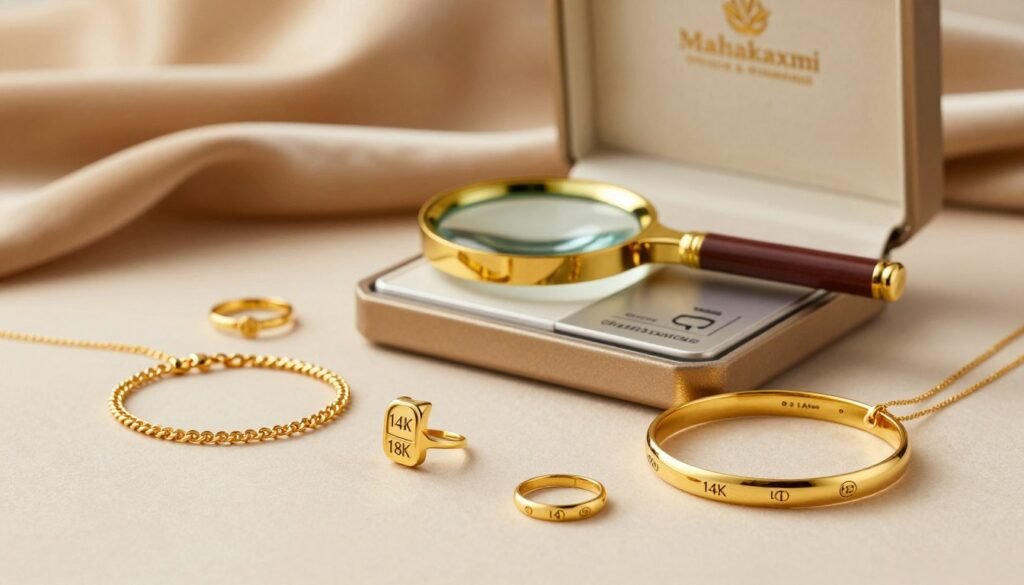
The term “karat” (K) measures the purity of gold in a piece. 24K gold is considered 99.9% pure, making it the softest and most malleable form available. Because it is so soft, it is rarely used for intricate jewellery designs.
As you move down the scale, alloys like copper, silver, or zinc are added to increase strength. 22K gold contains 91.6% gold, while 18K consists of 75% gold. 14K gold offers 58.3% purity, providing a durable balance for items that face daily wear and tear.
Match Purity to the Jewellery’s Intended Use
Choosing the right purity depends entirely on how you plan to use the piece. High-purity gold is excellent for storage, but it may not hold its shape well in complex, delicate designs.
Why 22K Gold Is Common for Traditional Indian Jewellery
In India, 22K gold is the gold standard for traditional jewellery. It offers a rich, vibrant yellow hue that is highly valued in cultural ceremonies and weddings. Its slight softness allows artisans to create intricate, handcrafted patterns that define classic Indian aesthetics.
Why Lower-Karat Gold Can Suit Daily-Wear Rings and Bracelets
If you need jewellery for everyday use, consider 18K or 14K options. These pieces contain more alloy, which makes them significantly harder and more resistant to scratches. You can wear these rings and bracelets daily without worrying about them bending or losing their shape.
Distinguish Solid Gold from Gold-Plated and Gold-Filled Jewellery
It is vital to know that “solid gold” is not the same as “gold-plated” or “gold-filled.” Solid gold means the entire piece is made of the same karat gold throughout. In contrast, plated or filled items only have a thin layer of gold over a base metal.
Always inspect the item for a hallmark stamp. If the piece is merely plated, it will not carry the same purity marks as solid gold. Always ask your seller to clarify the construction method before you finalize your purchase.
Check the Stated Fineness Number Alongside the Karat Mark
Beyond the karat mark, look for the fineness number stamped on the jewellery. This number represents the gold content in parts per thousand. For example, 22K gold is often marked as 916, indicating 916 parts of gold per 1000.
Comparing the karat mark with the fineness number provides an extra layer of verification. This simple step in your gold jewellery buying guide helps you confirm the authenticity of your purchase and ensures you are getting the quality you expect.
Verify BIS Hallmarking and the HUID Before Paying
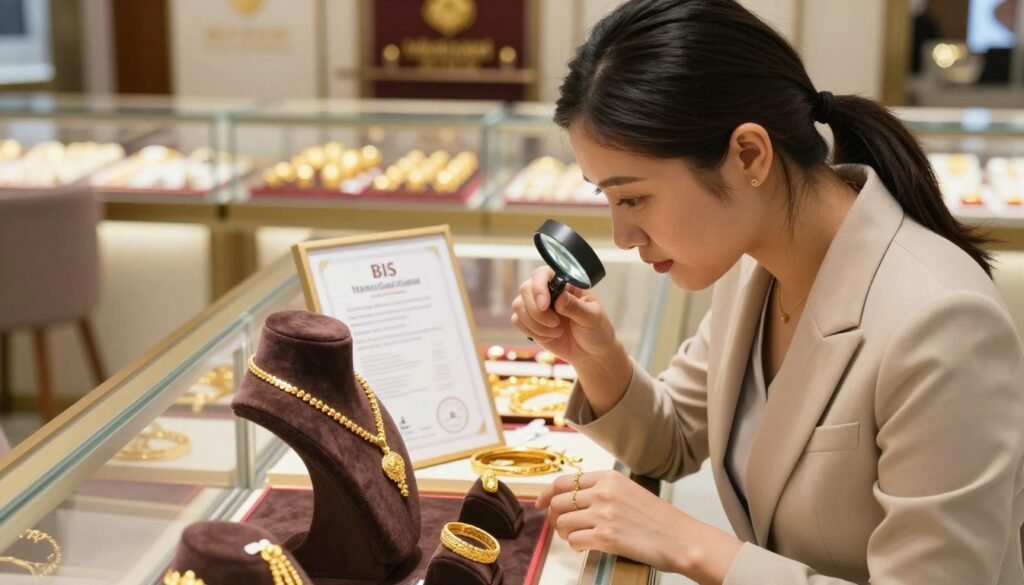
Protecting your investment starts with checking for the Bureau of Indian Standards (BIS) hallmark. These essential gold jewelry buying tips ensure that you receive exactly what you pay for in terms of quality and metal content. Always take a moment to inspect the piece closely before finalizing your transaction.
Identify the BIS Standard Mark and Purity Mark
Every authentic piece of hallmarked gold will feature the BIS logo, which is a triangular stamp. Alongside this, you will find the purity grade, such as 22K916 for 22-karat gold. These marks are your primary assurance that the gold meets national standards for fineness.
Understand How the Hallmark Unique Identification Number Works
The Hallmark Unique Identification (HUID) is a six-digit alphanumeric code laser-stamped on your jewellery. This code acts as a digital fingerprint for your specific item, allowing for full traceability from the hallmarking center to the retail shelf.
Use the BIS Care App or Official BIS Verification Tools
You can easily verify the authenticity of your purchase by downloading the official BIS Care app on your smartphone. Simply enter the HUID code into the app to view details about the jeweller, the hallmarking center, and the purity of the gold. This digital verification provides peace of mind that your gold is genuine.
Check Whether the HUID Matches the Jewellery and Invoice
It is vital to ensure that the HUID stamped on the physical jewellery matches the number printed on your purchase invoice. If these numbers do not align, do not complete the purchase. A mismatch often indicates that the documentation does not belong to the specific item you are holding.
Know What to Do When a Seller Cannot Explain the Hallmark
If a retailer seems unsure about the hallmarking process or cannot explain the HUID, you should proceed with extreme caution. A reputable jeweller will always be transparent about these markings. If they cannot provide clear answers, it is often safer to walk away and find a more reliable source for your gold.
Do Not Confuse a Brand Logo or Manufacturer Mark with a BIS Hallmark
Many stores stamp their own brand logo or a unique manufacturer mark on their pieces to identify their craftsmanship. However, these marks are not a substitute for the official BIS hallmark. Always look for the specific BIS triangular stamp to confirm that the piece has undergone independent government-approved testing.
Compare the Gold Rate Used for Your Purchase
Mastering the art of price comparison is a vital step in your gold jewelry shopping guide. Many buyers assume that the price displayed in a window is the final word, but market rates change daily. You must ensure you are getting a fair deal by understanding how these numbers work.
Ask Which Daily Gold Rate the Seller Has Applied
Every reputable jeweller in India updates their gold rates based on international market trends. Before you finalize your selection, always ask which specific rate the store is using for the day. This simple question helps you verify that the seller is being transparent with current market data.
Check the Rate for the Correct Purity
Gold rates are not universal; they depend entirely on the purity of the metal. You must confirm that the rate applied matches the karatage of your chosen piece. Using the wrong purity rate will lead to an incorrect valuation of your jewellery.
Compare 22K Rates with 18K or 14K Rates Correctly
It is a common mistake to compare a 22K rate directly against an 18K or 14K price. Because 22K gold contains a higher percentage of pure gold, its price per gram will naturally be higher than that of 18K or 14K gold. You should calculate the value based on the actual gold content to ensure you are not overpaying.
| Purity Level | Gold Content | Relative Price Trend |
|---|---|---|
| 24K | 99.9% | Highest |
| 22K | 91.6% | High |
| 18K | 75.0% | Moderate |
| 14K | 58.3% | Lower |
Confirm Whether the Quoted Rate Is Per Gram or for the Complete Piece
Some sellers might quote a price for the entire item to simplify the transaction. However, you should insist on knowing the price per gram to maintain clarity. This allows you to cross-reference the cost with the net weight of the gold in your piece.
Compare Final Prices Rather Than Advertised Gold Rates Alone
Do not be swayed by a low advertised gold rate, as it may be offset by high making charges or hidden fees. A comprehensive gold jewelry shopping guide suggests that you look at the total invoice amount. By comparing the final price after all additions, you can make a truly informed decision for your budget.
Break Down Making Charges, Wastage, GST, and Other Costs
Understanding the true cost of your gold purchase requires looking beyond the daily market rate. Many shoppers focus solely on the price per gram, but the final invoice includes several layers of fees that impact your total investment. Following gold jewelry buying tips will help you navigate these costs with confidence.
Understand Percentage-Based and Flat-Rate Making Charges
Jewellers typically apply making charges in one of two ways. Some use a percentage of the total gold value, while others charge a flat rate per gram of the finished piece.
It is essential to clarify which method your seller uses before you commit. Knowing this distinction prevents confusion when you compare different items in the showroom.
Ask How Wastage or Value Addition Has Been Calculated
Wastage, often called value addition, covers the gold lost during the crafting process. This fee varies significantly based on the complexity of the design.
Always ask for a clear explanation of how this percentage is derived. A highly intricate necklace will naturally carry a higher wastage fee than a simple, machine-made chain.
Account for GST and Any Stone, Certification, or Service Fees
Your final bill will include Goods and Services Tax (GST) on the total value of the jewellery. Additionally, you must account for the cost of any embedded gemstones, hallmarking certification, and specific service fees.
Use a Simple Formula to Recalculate the Invoice
You can verify your bill by using a basic calculation. Multiply the net gold weight by the daily rate, then add the making charges, wastage, and stone costs before applying the GST percentage.
Compare Similar Designs Using the Same Cost Categories
When evaluating two different pieces, ensure you are comparing apples to apples. Use the same cost categories for both items to see which offers better value for your money.
Negotiate Where the Seller Allows Discounts on Making Charges
While the gold rate is usually fixed by the market, making charges are often negotiable. You should focus your efforts on securing a discount on these service fees rather than trying to lower the gold price itself.
Adopting these best gold jewelry buying practices ensures you pay a fair price for the craftsmanship you receive. Always ask for a breakdown of these charges in writing before finalizing your payment.
Examine Design Quality, Gold Weight, and Craftsmanship
Beyond the purity of gold, the physical integrity of your jewellery determines its longevity and value. Following these tips for purchasing gold jewellery will help you ensure that your investment is built to last through years of regular use.
Inspect Soldered Joints, Clasps, Hooks, and Hinges
Carefully examine every connection point on the piece. Soldered joints should be seamless and smooth, showing no signs of gaps or rough edges that could snag on clothing.
Test all moving parts, such as hinges on lockets or clasps on necklaces. A high-quality mechanism should operate smoothly without feeling loose or prone to accidental opening.
Check Whether the Stated Gold Weight Excludes Stones and Non-Gold Parts
Always clarify the difference between gross weight and net gold weight. The gross weight includes the total mass of the item, including stones, enamel, or wax fillings.
You should only pay for the actual gold content. Ensure the invoice clearly distinguishes the weight of the gold from the weight of any decorative additions to avoid overpaying.
Look for Even Finishing, Secure Settings, and Smooth Edges
Run your fingers gently over the surface of the jewellery to check for sharp edges or uneven textures. A well-crafted piece will feel comfortable against your skin and maintain a consistent polish throughout.
Examine the settings of any embedded stones. The prongs or bezels must be tight and secure, ensuring that no stone feels loose or rattles when you shake the piece.
Test Earring Backs, Chain Links, and Bracelet Locks
Check that earring backs fit snugly on the posts to prevent loss. For chains, inspect each individual link to ensure it is fully closed and shows no signs of thinning or stress.
Bracelet locks should provide a satisfying, secure click. If a lock feels flimsy, it may require professional adjustment before you take the item home.
Check Bangles and Rings for Deformation or Thin Sections
Hold bangles and rings up to the light to check for perfect circularity. Any visible deformation or flat spots can indicate that the metal is too thin or has been poorly handled during manufacturing.
Avoid pieces with excessively thin sections, as these are prone to bending or breaking under daily pressure. A sturdy, uniform thickness is a hallmark of superior craftsmanship.
Choose Construction That Matches Your Expected Wear
Consider how often you plan to wear the item. Delicate, intricate designs are beautiful for special occasions but may not withstand the rigors of daily wear.
Prioritize durable, solid construction for everyday pieces to ensure they remain in excellent condition. Applying these tips for purchasing gold jewellery ensures you balance aesthetic appeal with long-term structural reliability.
Get the Right Fit and Test Comfort Before You Buy
Finding the perfect fit is just as important as choosing the right design when buying gold jewelry for beginners. While a piece may look stunning in a display case, its true value lies in how it feels during your daily routine. Prioritizing comfort ensures that your investment becomes a cherished part of your wardrobe rather than a piece left sitting in a box.
Measure Ring Size Accurately in Real Wearing Conditions
Always measure your finger when your hands are at a normal temperature. Cold weather can cause your fingers to shrink, while heat often leads to slight swelling. Consistency is key, so try to visit the jeweler during a time of day when your hands feel most natural.
Check Chain and Necklace Length Against Your Clothing and Neckline
Consider the types of outfits you wear most often when selecting a chain length. A necklace that sits perfectly with a crew neck might disappear under a deep V-neck or feel restrictive with a high collar. Always test the drape of the chain against your skin to ensure it does not snag on clothing or hair.
Evaluate Earring Weight, Balance, and Backing Security
Heavy earrings can cause discomfort or even stretch your earlobes over time. Check that the earring sits flush against your ear and that the backing is secure enough to prevent accidental loss. Balance is essential; if the earring tilts forward, it may not be crafted with the precision you deserve.
Leave Room for Comfort When Buying Bangles and Bracelets
A bangle should slide over your knuckles with a bit of resistance but move freely on your wrist. If it is too tight, it will feel restrictive; if it is too loose, it risks catching on objects. Always leave a small gap to allow for natural movement throughout the day.
Account for Heat, Swelling, and Everyday Movement
Your body size fluctuates based on hydration, activity levels, and ambient temperature. When buying gold jewelry for beginners, remember that a piece that feels snug in the morning might feel tight by the evening. Account for these subtle changes to ensure long-term wearability.
Wear or Handle the Piece Before Finalising the Purchase
Never hesitate to try on the jewelry before you pay. Feel the weight, check the flexibility of hinges, and ensure that clasps are easy for you to operate independently. Taking these extra minutes to handle the piece helps you confirm that the craftsmanship meets your personal standards for quality and comfort.
Assess the Seller’s Reliability, Buyback Terms, and Exchange Policy
Trust is the most valuable currency when you decide how to buy gold jewellery. Beyond the aesthetic appeal of a necklace or ring, the reputation of your jeweller ensures that your investment remains secure for years to come.
Choose a BIS-Registered Jeweller with Clear Business Details
Always prioritize jewellers who display a valid Bureau of Indian Standards (BIS) registration. A reputable shop will provide clear documentation, including a physical address, contact information, and a transparent business history.
Verify that the store is well-established in your local market. Transparency in business operations is a strong indicator that the seller stands behind the quality of their products.
Read Buyback, Exchange, and Return Conditions Before Payment
Before you finalize any transaction, request a written copy of the store’s buyback and exchange policy. Understanding these terms is essential for managing your financial expectations in the future.
Check How the Seller Values Gold on a Future Exchange
Ask the staff specifically how they calculate the value of your gold if you decide to exchange it later. Reliable jewellers typically offer a percentage of the current market rate for the gold weight, excluding taxes.
Ask Whether Making Charges and Stone Costs Are Deducted
It is common for sellers to deduct making charges and the value of any embedded stones during a buyback. Ensure you clarify if these costs are fully or partially subtracted from the final payout amount.
Confirm Repair, Resizing, Cleaning, and After-Sales Support
A great jeweller provides more than just a product; they offer long-term care for your valuables. Ask if they provide complimentary cleaning services or affordable resizing options for rings and bracelets.
Knowing that you have a reliable point of contact for repairs gives you peace of mind. Always confirm if these services are available in-house or if they are outsourced to third-party workshops.
Be Cautious of Pressure Tactics and Unusually Low Prices
If a seller uses aggressive sales tactics or offers prices significantly lower than the daily market rate, proceed with extreme caution. Unusually low prices often signal compromised purity or hidden costs that may surface later.
Take your time to evaluate the offer and never feel forced to make an immediate decision. A trustworthy seller will respect your need to verify details before you commit to a purchase.
| Feature | Reliable Jeweller | Unreliable Seller |
|---|---|---|
| BIS Hallmarking | Always provided | Often missing or fake |
| Pricing Transparency | Clear breakdown | Vague or hidden fees |
| Buyback Policy | Written and fair | Verbal or non-existent |
| After-Sales Care | Included services | No support offered |
Buy Gold Jewellery Online Without Losing Transparency
You can enjoy the ease of shopping for gold from your home if you follow a structured, transparent verification process. While buying gold jewelry online offers unmatched convenience, it requires a careful approach to ensure your investment remains secure and authentic.
Verify the Website, Seller Identity, and Customer Support Channels
Before you browse, ensure the website belongs to a reputable, established jeweler. Look for a physical address, a landline number, and active customer support channels that respond to your queries.
Check for a secure connection (HTTPS) and read independent reviews from other customers. A trustworthy seller will always provide clear contact details and a transparent history of their business operations.
Read the Product Page for Purity, Net Weight, HUID, and Dimensions
Every product page must clearly state the gold purity, such as 22K or 18K. You should also find the net weight of the gold, the Hallmark Unique Identification (HUID) number, and precise dimensions.
If this information is missing, do not proceed with the purchase. Transparency regarding these technical specifications is essential when buying gold jewelry online to avoid future disputes.
Compare Product Photos with Size Charts and Videos
Relying on a single image is rarely enough. Use provided size charts to understand the scale of the piece and watch any available videos to see how the jewelry moves and reflects light.
Check Whether the Displayed Price Can Change with the Gold Rate
Gold prices fluctuate daily. Confirm if the price you see is locked at the time of checkout or if it is subject to change based on the daily market rate.
Confirm Delivery Insurance, Packaging, and Tamper-Evident Seals
Your shipment must be fully insured against theft or damage during transit. Ensure the seller uses tamper-evident packaging to protect your purchase until it reaches your hands.
Understand Online Return, Refund, Exchange, and Resizing Rules
Always read the fine print regarding returns and exchanges before you pay. Understand the specific conditions under which you can return an item, especially if it does not fit or meet your expectations.
Check if the seller offers complimentary resizing services. Knowing these policies upfront prevents frustration if the item requires adjustment after delivery.
Inspect the Jewellery and Documentation Immediately After Delivery
Once your package arrives, inspect the item and the accompanying documents immediately. Verify that the HUID on the jewelry matches the details on your invoice and the purity certificate.
If you notice any discrepancies or damage, contact the seller’s support team right away. Keeping your documentation safe is a vital step in buying gold jewelry online to protect your long-term ownership rights.
Check Gemstones, Diamonds, and Decorative Additions Separately
When you purchase diamond gold jewellery, understanding the value of each component is essential for a smart investment. You should never treat the total price as a single lump sum without knowing exactly what you are paying for.
Separate the Value of Gold from the Value of Stones
Gold is a commodity with a daily market rate, while stones are valued based on rarity, cut, and clarity. Always ask your jeweller to provide a clear breakdown of the gold weight versus the weight and cost of the stones. This transparency prevents you from overpaying for decorative elements that may not hold the same resale value as the metal itself.
Ask for Diamond and Gemstone Certificates When Applicable
Following professional gemstone jewellery buying tips can save you from significant financial loss. Always request an independent laboratory certificate for any high-value diamond or gemstone. These documents verify the authenticity and quality of the stones, ensuring you receive exactly what you paid for.
Confirm Whether Stones Are Natural, Lab-Grown, Synthetic, or Imitation
The origin of a stone drastically impacts its market price. You must confirm if the stones are natural, lab-grown, or synthetic, as these categories carry very different price tags. Never assume a stone is natural simply because it is set in gold.
Check Diamond Grading Details and Certification Information
For diamonds, look for the 4Cs: Cut, Color, Clarity, and Carat weight. Ensure these details are explicitly mentioned on your invoice or a dedicated grading report. Reliable certification from recognized bodies provides peace of mind regarding your purchase.
Ask How Stone Weight Affects the Jewellery’s Net Gold Weight
It is common for stones to be weighed along with the gold, but this can be misleading. You must clarify if the stone weight has been deducted from the total weight to arrive at the net gold weight. Paying gold prices for the weight of a stone is a common pitfall that you should actively avoid.
Inspect Prongs, Bezels, Beads, and Other Settings for Security
The physical integrity of your jewellery depends on how well the stones are held in place. Carefully inspect prongs, bezels, and bead settings to ensure they are smooth and secure. Loose settings can lead to the accidental loss of expensive stones, so verify that every piece is firmly attached before you leave the store.
Choose Jewellery That Fits Your Style, Wardrobe, and Occasion
Finding the perfect balance between aesthetic appeal and practical utility is key to a smart purchase. When you follow a gold jewelry shopping guide, you should look beyond the sparkle and consider how a piece fits your unique lifestyle. Your jewellery should act as an extension of your personality while remaining functional for your daily routine.
Select Everyday Pieces That Coordinate with Multiple Outfits
For daily wear, prioritize versatility. Choose minimalist designs like thin chains, small studs, or simple bangles that transition easily from the office to social gatherings. These pieces should complement your existing wardrobe rather than clashing with your favorite colors or fabrics.
Balance Traditional Indian Designs with Long-Term Wearability
Traditional Indian jewellery often features intricate craftsmanship that is perfect for weddings and festivals. However, if you want pieces that last a lifetime, look for designs that blend classic motifs with modern, clean lines. This approach ensures your investment remains timeless and wearable across different decades.
Consider Skin Sensitivity, Alloy Colour, and Rhodium-Plated Finishes
Your comfort is just as important as the design. If you have sensitive skin, opt for higher purity gold or ensure the alloy does not contain nickel, which is a common allergen. You might also encounter rhodium-plated finishes, which provide a bright white shine but may require periodic re-plating to maintain their luster.
| Alloy Type | Durability | Skin Sensitivity | Best Use |
|---|---|---|---|
| 22K Gold | Moderate | Low Risk | Traditional Sets |
| 18K Gold | High | Very Low Risk | Daily Wear |
| Rhodium Plated | Surface Only | Variable | Fashion Pieces |
Think About Resale Appeal When Choosing Highly Trend-Driven Designs
While it is tempting to buy the latest fashion-forward styles, remember that trends fade quickly. Highly stylized or novelty pieces often have lower resale value compared to classic, solid gold designs. If you are a practical buyer, focus your budget on durable staples that hold their value, using this gold jewelry shopping guide to help you distinguish between passing fads and lasting investments.
Read the Invoice and Keep Every Purchase Document
A detailed invoice is your most important tool for protecting your investment. Before you leave the store, ensure that your receipt serves as a comprehensive record of your transaction. Incorporating this step into your gold jewelry buying checklist will help you avoid future disputes regarding purity or pricing.
Confirm Purity, Gross Weight, Net Gold Weight, and HUID on the Bill
Your invoice must clearly state the exact purity of the gold, such as 22K or 18K. It should also distinguish between the gross weight of the item and the net gold weight, which excludes any stones or attachments. Always verify that the unique Hallmark Unique Identification (HUID) number is printed on the bill to ensure the piece is hallmarked.
Check the Gold Rate, Making Charges, Wastage, GST, and Total Amount
Transparency in pricing is essential for any buyer. Your bill should itemize the daily gold rate applied, the specific making charges, and any wastage percentages. Ensure that the GST is calculated correctly on the total value, and confirm that the final amount matches the price you agreed upon during your gold jewelry buying checklist review.
Make Sure the Invoice Identifies Stones and Other Materials Clearly
If your jewelry contains diamonds, gemstones, or other non-gold materials, these must be listed separately. The invoice should specify the weight and quality of these stones to prevent confusion. This clarity ensures you understand exactly what you are paying for and how the total cost was derived.
Store the Invoice, Certificate, Packaging, and Valuation Records Safely
Once you arrive home, organize your purchase documents in a secure location. Keep the original invoice, any provided certificates of authenticity, and the original packaging together. These records are crucial for future exchanges, insurance claims, or potential resale, making them a vital part of your gold jewelry buying checklist.
Use This Gold Jewellery Buying Checklist Before You Pay
Adopting the best gold jewelry buying practices will give you peace of mind when you head to the checkout counter. Before you finalize your transaction, it is vital to perform a final review of your purchase to ensure everything aligns with your expectations and the seller’s promises.
Purity and Hallmarking Checks
Confirm the BIS Mark, Purity Mark, and HUID
Always inspect the piece for the official BIS hallmark. You should clearly see the BIS logo, the purity grade (such as 22K916), and the unique six-digit alphanumeric HUID code. Never accept a piece that lacks these critical markings, as they are your primary guarantee of gold quality.
Match the Jewellery Details with the Invoice
Compare the physical markings on the jewellery directly against the details printed on your bill. Ensure the HUID code on the item matches the code listed on your invoice exactly. This verification step is essential for maintaining a clear audit trail of your ownership.
Price and Cost Checks
Verify the Gold Rate, Net Weight, Making Charges, Wastage, and GST
Review your invoice to confirm that the daily gold rate applied is accurate for the day of your purchase. Check that the net weight of the gold is calculated separately from any stones or non-gold components. Transparency in making charges, wastage percentages, and GST is a hallmark of a reputable seller.
Quality and Ownership Checks
Test the Fit, Finish, Clasps, Settings, and Return Terms
Before leaving the store, physically test the functionality of all clasps, hooks, and hinges. Examine the settings of any embedded stones to ensure they are secure and free from loose prongs. Using this gold jewelry buying checklist helps you catch potential defects before they become your responsibility.
Keep Proof of Purchase and Seller Commitments
Store your original invoice, warranty cards, and any written promises regarding buyback or repair policies in a safe place. These documents are your strongest protection if you need to request a repair, resizing, or future exchange. Always keep your paperwork organized to ensure a smooth experience throughout the life of your jewellery.
Conclusion
Investing in gold jewellery requires a blend of careful planning and informed decision-making. You protect your financial interests by starting with clear goals, a defined budget, and a focus on purity. Always prioritize the BIS hallmark and HUID verification to ensure the authenticity of your precious metal.
Your final purchase price reflects more than just the daily gold rate. You must account for making charges, wastage, GST, and the specific value of any gemstones included in the design. Comparing these total costs across reputable jewellers like Tanishq or Kalyan Jewellers helps you secure the best value for your money.
Physical inspection remains vital before you finalize any transaction. Check the fit, comfort, and craftsmanship of your chosen piece to ensure it meets your expectations for daily wear or special occasions. Reviewing the store policies regarding buyback and exchange provides peace of mind for your future ownership needs.
Keep every invoice, certificate, and valuation record in a secure location. These documents serve as your proof of purchase and are essential for any future resale or insurance claims. By following these practical steps, you navigate the gold market with confidence and clarity.