
When you shop for fine jewelry, you might feel overwhelmed by the variety of options available today. Both natural vs lab grown diamonds are essentially crystallized carbon with the same physical structure. Because they share identical chemical properties, they look nearly indistinguishable to the naked eye.
Choosing between these stones often comes down to your personal priorities rather than a simple definition of quality. Whether you are considering natural vs synthetic diamonds, you must weigh factors like origin, ethical sourcing, and long-term resale value in the Indian market. Price and certification also play a vital role in your final decision.
This guide provides a balanced look at these beautiful gems to help you compare equivalent pieces. By understanding the unique characteristics of each, you can feel confident in your purchase and select the perfect stone for your needs.
Key Takeaways
- Both stone types share the same chemical composition and crystal structure.
- Appearance is virtually identical, making them hard to tell apart without specialized equipment.
- Price differences are significant, often favoring the man-made variety for budget-conscious buyers.
- Ethical considerations and environmental impact are major drivers for modern consumers.
- Resale value in India varies, so consider your long-term investment goals before buying.
- Certification remains essential for verifying the quality and origin of your jewelry.
Natural vs Lab Grown Diamonds: The Essential Difference
Deciphering the technical and physical distinctions between these two diamond types is essential for every modern buyer. When you explore the market, you will find that natural vs lab grown diamonds represent two distinct paths to the same beautiful result. Understanding these origins helps you feel confident in your purchase at any Indian jewellery store.
How natural diamonds form beneath the Earth
Natural diamonds are the result of a remarkable geological journey. They form deep within the Earth’s mantle under conditions of extreme heat and intense pressure over billions of years.
Volcanic activity eventually carries these stones toward the surface through kimberlite pipes. This long, natural process makes every mined diamond a unique piece of history.
How lab-grown diamonds are created in controlled facilities
In contrast, the differences between lab grown and natural diamonds primarily lie in their timeline and environment. Scientists replicate the Earth’s natural conditions using advanced technology in controlled laboratory settings.
There are two primary methods used today: High Pressure High Temperature (HPHT) and Chemical Vapor Deposition (CVD). These processes allow for the creation of high-quality stones in a matter of weeks rather than eons.
Why both options qualify as real diamonds
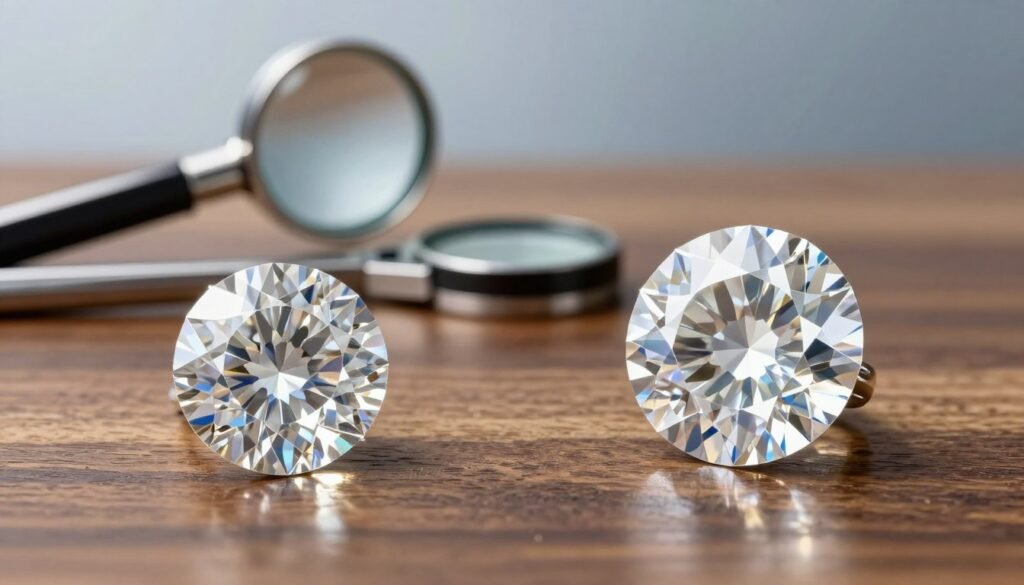
It is a common misconception that one type is “fake.” In reality, lab grown diamonds vs real diamonds is a misleading comparison because both are chemically, physically, and optically identical.
Both options consist of carbon atoms arranged in a rigid diamond crystal structure. Because they share the same atomic makeup, they are both authentic diamonds that exhibit the same brilliance and fire.
What the term “synthetic diamond” actually means
When discussing natural vs synthetic diamonds, it is important to clarify the terminology used in the industry. The word “synthetic” in a gemological context simply means “laboratory-created.”
It does not imply that the stone is an imitation, cubic zirconia, or a plastic substitute. When you speak with your jeweller, remember that lab grown diamonds vs natural refers to the origin of the stone, not its status as a genuine diamond.
Lab Grown Diamonds vs Natural Diamonds at a Glance
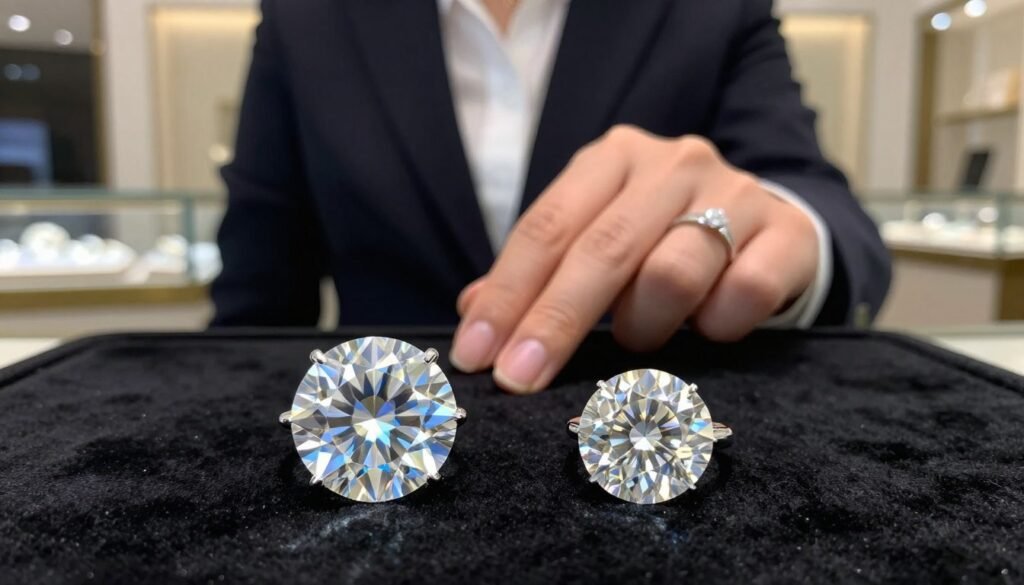
If you are curious about how lab grown diamonds vs natural stones stack up, you have come to the right place. Navigating the world of fine jewelry requires a clear look at how these two options compare in the modern market. While they may look identical to the naked eye, understanding their unique origins helps you make a choice that aligns with your personal values and budget.
Side-by-side comparison of origin, appearance, composition, and price
To help you visualize the differences, consider the following breakdown. This table highlights the key factors that define each stone type.
| Feature | Natural Diamond | Lab-Grown Diamond |
|---|---|---|
| Origin | Mined from the Earth | Created in a laboratory |
| Composition | Pure Carbon | Pure Carbon |
| Hardness | 10 on Mohs Scale | 10 on Mohs Scale |
| Price | Higher (Rarity premium) | Lower (Production efficiency) |
Which characteristics are identical in both diamond types
It is a common misconception that one type is “fake.” In reality, both options are real diamonds. They share the exact same chemical composition, crystal structure, and physical hardness.
When you look at lab grown diamonds compared to natural stones, you will find that their brilliance, fire, and scintillation are indistinguishable. Both are graded using the same 4Cs—cut, color, clarity, and carat—by reputable laboratories. Whether you choose a mined stone or a lab-created one, you are getting a gemstone that is durable enough for a lifetime of wear.
Where the two options differ most for Indian buyers
For buyers in India, the primary differences often lie in resale value and cultural perception. Natural diamonds have historically been viewed as heirlooms with stable long-term value. Conversely, lab-grown options offer significant budget flexibility, allowing you to purchase a larger or higher-quality stone for the same price.
Retailer policies also vary significantly across the country. Some traditional jewelers focus exclusively on mined stones, while others are embracing the lab-grown market. Always check if your chosen retailer provides clear certification and a transparent buy-back policy, as these factors can influence your long-term satisfaction.
Quick comparison criteria for engagement rings and everyday jewellery
When selecting a stone for an engagement ring, you might prioritize the emotional significance and rarity associated with natural diamonds. These stones are often chosen for their status as traditional symbols of commitment.
For everyday jewelry, such as earrings or pendants, lab grown diamonds compared to natural stones offer a practical advantage. You can achieve a high-end look at a fraction of the cost, making it easier to build a versatile collection. Ultimately, the best choice depends on whether you value rarity or affordability for your specific piece.
How Diamond Origin Affects Appearance and Quality
You might be surprised to learn that even experts struggle to tell the difference between these stones without high-tech tools. When comparing natural diamonds vs lab created options, the most striking reality is that they share the same chemical, physical, and optical properties.
Why you usually cannot distinguish them by sight
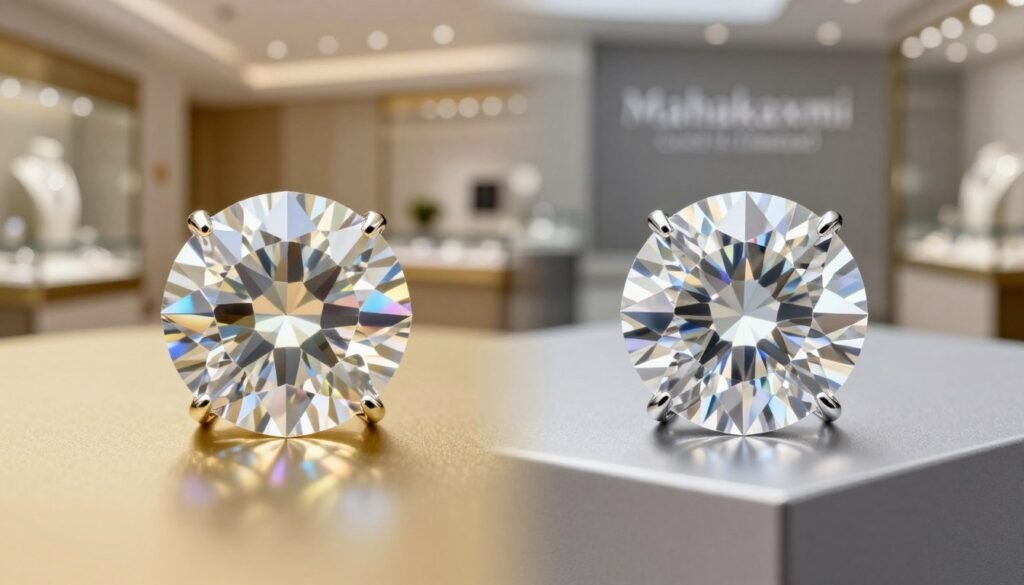
To the naked eye, a lab-grown diamond and a mined diamond are identical. Both stones possess the same brilliance, fire, and scintillation that make diamonds so desirable for jewellery in India.
Because they are both composed of pure carbon arranged in a crystal lattice, they interact with light in the exact same way. Unless you have access to specialized equipment, you will not be able to spot a difference in their sparkle or luster.
Cut, colour, clarity, and carat: the four quality factors
When evaluating any diamond, you should focus on the Four Cs. These factors determine the beauty and value of the stone regardless of its origin.
- Cut: This is the most important factor, as it dictates how well the diamond reflects light.
- Colour: This measures the absence of color, with D being the most colorless grade.
- Clarity: This assesses the presence of internal inclusions or surface blemishes.
- Carat: This measures the weight of the stone, though it does not directly define its beauty.
Laboratory testing methods and growth-related features
While they look the same, gemological laboratories use advanced technology to identify the differences between lab grown and natural diamonds. These machines look for specific growth patterns or trace elements that differ based on how the diamond was formed.
For instance, natural diamonds often contain tiny nitrogen impurities or specific crystal structures from their time deep within the Earth. Lab-grown diamonds may show distinct patterns from the high-pressure or chemical vapor deposition processes used in their creation.
How diamond shape and setting influence the final look
The final appearance of your jewellery depends more on the shape and setting than the origin of the stone. A well-chosen setting can enhance the perceived size of a diamond or protect its edges from daily wear.
| Feature | Impact on Appearance | Key Consideration |
|---|---|---|
| Diamond Shape | Affects light return and size | Round cuts offer maximum sparkle |
| Setting Style | Influences light entry | Prong settings allow more light |
| Metal Choice | Complements stone color | Gold or platinum affects contrast |
Natural Diamonds vs Lab Created Diamonds: Durability and Care
You might wonder if the physical strength of a stone changes depending on how it was created. When comparing lab created vs natural diamonds, it is important to understand that their physical composition is virtually identical.
Why both diamond types score highly on the Mohs hardness scale
Both natural and lab-grown diamonds rank at a perfect 10 on the Mohs scale of mineral hardness. This means they are the hardest known natural material on Earth.
Because of this, they are exceptionally resistant to surface scratches. You can wear your jewelry daily without worrying about the stone losing its polish or becoming dull over time.
Resistance to scratches, chips, heat, and daily wear
While their hardness is impressive, it is a common misconception that diamonds are indestructible. Hardness refers only to a material’s resistance to scratching, not its resistance to impact.
Even the highest quality lab grown diamonds vs real diamonds can chip if they are struck at a vulnerable angle. Sharp corners on shapes like princess or marquise cuts are more prone to damage than rounded shapes like round brilliants.
Always be mindful when performing heavy manual labor or sports while wearing your jewelry. A sharp blow to the girdle or a thin edge can cause a fracture regardless of the stone’s origin.
Cleaning and maintenance for rings, earrings, and bracelets
To keep your jewelry looking its best, regular cleaning is essential. Over time, oils from your skin, lotions, and soaps can build up on the surface, making the stone appear cloudy.
You can safely clean your diamonds at home using a soft-bristled toothbrush and a mild solution of warm water and gentle dish soap. Gently scrub the stone and the setting to remove debris from underneath the table.
For a deeper clean, visit a professional jeweler in India at least once a year. They can use ultrasonic cleaners or steam to reach tight spots and check for any loose stones.
How the metal setting affects long-term durability
The longevity of your jewelry depends heavily on the craftsmanship of the setting. A secure prong setting protects the edges of your diamond from accidental knocks.
Bezel settings offer even greater protection by surrounding the entire perimeter of the stone with metal. This is an excellent choice for active individuals who want extra peace of mind.
Finally, ensure your jewelry is crafted from high-quality metals like 18k gold or platinum. A sturdy setting acts as a shield, ensuring your diamond remains safe for a lifetime of wear.
Price, Value, and Resale Considerations in India
Deciding between natural diamonds vs lab created options involves looking beyond the initial cost. While the sparkle may look identical, the financial journey of these two stones differs significantly in the Indian market.
Why lab-grown diamonds generally cost less upfront
Lab-grown diamonds are created in controlled environments that allow for consistent production. Because manufacturers can scale their output to meet demand, the supply is not limited by geological scarcity.
This efficiency in production helps keep the initial purchase price lower for consumers. You are essentially paying for the technology and energy required to grow the stone rather than the costs associated with traditional mining.
How mined diamond pricing is influenced by rarity and supply chains
Natural diamonds are finite resources that require extensive exploration and extraction efforts. The journey from a deep-earth mine to a retail store involves complex supply chains, including sorting, cutting, and polishing, which adds to the final cost.
Their value is deeply rooted in geological rarity and the high costs of maintaining ethical and safe mining operations. This scarcity is a primary driver of the premium price tag associated with natural stones.
What affects the resale value of each diamond type
Resale value is rarely guaranteed for any piece of jewelry, regardless of its origin. Several factors influence what you might receive if you decide to sell or trade your diamond later:
- Market Demand: Current trends and consumer preferences play a huge role.
- Documentation: A recognized grading report is essential for proving authenticity.
- Condition: Any damage or wear will significantly lower the resale price.
- Retailer Policy: Some jewelers offer specific buyback programs that others do not.
Why purchase price and investment value are not the same
It is a common misconception that a high purchase price automatically equates to a sound financial investment. When comparing lab created vs natural diamonds, remember that jewelry is primarily a personal purchase meant for enjoyment.
“A diamond’s true value is found in the memories it holds, not just the market price on a receipt.”
Treating a diamond as a liquid asset can be risky. Market fluctuations and the specific characteristics of the stone, such as its cut and clarity, will always dictate its future worth more than the original price paid.
Questions to ask a jeweller about buyback and exchange policies
Before finalizing your purchase, have an open conversation with your jeweler. Getting clear answers now can save you from disappointment later:
- What is the specific buyback percentage offered for this stone?
- Are there restrictions on when I can exchange my diamond?
- Will the setting be included in the valuation, or is it just for the stone?
- Are there any deductions for market depreciation or re-certification fees?
Lab Grown vs Mined Diamonds: Environmental and Ethical Factors
The debate between lab grown vs mined diamonds often centers on the ecological impact of their creation. As a conscious consumer in India, you likely want to know how your jewelry choices affect the planet and the people involved in the supply chain.
Land disturbance, energy use, and water use in mining
Traditional diamond mining involves significant earth movement, which can lead to habitat loss and soil erosion. Large-scale operations require vast amounts of water for processing and dust suppression, often in regions where water scarcity is a concern.
Furthermore, the energy intensity of heavy machinery used in extraction contributes to a high carbon footprint. While many mining companies now implement land reclamation projects, the physical footprint of a mine remains a permanent alteration to the local landscape.
Electricity sources and emissions in lab-grown production
The environmental profile of natural vs synthetic diamonds depends heavily on the production facility. Lab-grown diamonds require high-pressure, high-temperature (HPHT) or chemical vapor deposition (CVD) processes that consume significant electricity.
If a facility relies on renewable energy, the carbon emissions are drastically lower than those of traditional mining. However, if the facility uses coal-heavy power grids, the environmental benefit of the lab-grown process may be diminished.
Worker welfare, community impact, and supply-chain transparency
Ethical sourcing is a priority for many modern buyers. In the mining sector, this involves ensuring fair wages, safe working conditions, and support for local communities near mining sites.
Lab-grown production facilities generally offer more controlled, factory-style environments. Regardless of the origin, you should look for brands that provide full supply-chain transparency to ensure that human rights are respected at every stage of production.
Why “ethical” and “sustainable” require more than a product label
Terms like “ethical” and “sustainable” are often used as marketing buzzwords without standardized definitions. A label alone does not guarantee that a stone was produced with minimal environmental harm or fair labor practices.
You must look for verifiable data rather than relying on broad claims. Always ask the jeweler for specific details regarding the origin and the certifications held by the manufacturer.
How certification and sourcing disclosures can support a more informed choice
Requesting a grading report that includes origin disclosure is the best way to protect your investment. These documents help you verify whether you are purchasing natural vs synthetic diamonds and provide insight into the company’s commitment to responsible practices.
| Factor | Mined Diamonds | Lab-Grown Diamonds |
|---|---|---|
| Primary Impact | Land disturbance | Electricity consumption |
| Water Usage | High | Low |
| Carbon Footprint | High (Extraction) | Variable (Energy source) |
| Labor Focus | Community safety | Factory standards |
Certification, Grading Reports, and Buying Protection
Whether you are looking at lab grown vs mined diamonds, the grading report is your most reliable tool for verifying quality. This document acts as a professional “passport” for your stone, ensuring you receive exactly what you pay for. Without it, you are essentially relying on verbal promises rather than objective, scientific data.
What a recognised grading report tells you
A reputable grading report provides a comprehensive breakdown of your diamond’s physical characteristics. It details precise measurements, proportions, clarity, color, and carat weight. Furthermore, it notes any specific treatments or enhancements the stone may have undergone to improve its appearance.
How reports identify natural, laboratory-grown, and treated diamonds
Transparency is vital when comparing lab grown diamonds vs real diamonds. Modern grading reports explicitly state the origin of the stone, distinguishing between those mined from the earth and those created in a laboratory. This disclosure helps you avoid unclear product descriptions and ensures you understand the true nature of your purchase.
“The integrity of a diamond’s documentation is the cornerstone of consumer trust in the jewellery industry.”
Comparing GIA, IGI, and other documentation available in India
In the Indian market, you will encounter various certification bodies. The Gemological Institute of America (GIA) is often considered the gold standard for natural stones, while the International Gemological Institute (IGI) is widely respected for its expertise in grading laboratory-grown diamonds. Always ensure the report comes from a globally recognized laboratory to maintain the long-term value of your jewellery.
Why laser inscriptions and report verification matter
Many modern diamonds feature a microscopic laser inscription on the girdle that matches the report number. This feature allows you to verify your stone’s identity instantly using the laboratory’s online database. By checking this number, you gain peace of mind that the diamond you received is the exact one described in your paperwork.
Details to confirm on an Indian jewellery invoice
When finalizing your purchase, your invoice must be as detailed as the grading report itself. Ensure the following information is clearly printed:
- Explicit origin disclosure (Natural or Lab-Grown).
- Detailed 4Cs grading (Cut, Color, Clarity, Carat).
- Valid GST identification and tax breakdown.
- Clear return and buy-back terms.
Choosing the Right Diamond for Your Budget and Priorities
Deciding on a diamond is a deeply personal process that balances aesthetic desires with practical financial planning. When evaluating lab grown diamonds vs natural options, you must consider what truly holds value for your specific lifestyle and future plans.
When a lab-grown diamond may suit your budget better
If your primary goal is to maximize the visual impact of your jewelry, lab-grown stones are an excellent choice. They allow you to allocate your funds toward a larger carat weight or a higher clarity grade that might otherwise be out of reach.
By choosing these stones, you can often secure a premium cut that enhances light performance without exceeding your financial limits. This flexibility makes them a popular option for those who prioritize size and brilliance above all else.
When a natural diamond may better match your preferences
For many buyers, the allure of a natural diamond lies in its geological history and status as a finite resource. If you value tradition, rarity, and the emotional significance of a stone formed over millions of years, a mined diamond may feel more meaningful.
These stones often carry a sense of legacy that resonates with those planning for long-term heirlooms. When lab grown diamonds compared to natural stones are analyzed, the choice often shifts from pure economics to personal sentiment and heritage.
Balancing carat size with cut, colour, and clarity
It is a common mistake to focus solely on carat weight when shopping. You should always prioritize cut quality, as it is the primary factor that determines how much fire and sparkle your diamond displays.
A smaller, well-cut diamond will often look more impressive than a larger stone with a poor cut. Aim for a balance where the clarity and color complement the size, ensuring the stone looks beautiful in any lighting condition.
Deciding whether origin, rarity, or size matters most to you
Ask yourself if you prefer a stone that represents modern innovation or one that connects you to the Earth’s ancient history. Some buyers find that the origin of the diamond is the most critical factor, while others are more concerned with the physical dimensions of the gem.
There is no right or wrong answer, as your decision should reflect your personal values. Whether you choose a lab-grown or natural stone, ensure it aligns with your long-term vision for the piece.
How to set a realistic total budget for the stone and setting
Your budget should encompass more than just the price of the center stone. To avoid unexpected costs, create a comprehensive plan that includes the following:
- The cost of the setting and side stones.
- Applicable taxes and import duties.
- Professional certification fees.
- Future maintenance, such as resizing or prong tightening.
- Annual insurance premiums to protect your investment.
How Personal Style and Occasion Can Guide Your Decision
Your choice between lab created vs natural diamonds often depends on the specific occasion and the emotional value you attach to the piece. While both options offer stunning brilliance, the context of your purchase—whether it is a milestone engagement or a thoughtful gift—should influence your final selection.
Selecting a diamond for an engagement ring
An engagement ring is typically worn every single day, making durability and practicality your top priorities. You need a setting that protects the stone from accidental knocks during your daily routine.
Whether you choose a lab created vs natural diamonds, ensure the mounting is secure. A bezel or six-prong setting often provides better protection for active lifestyles compared to a delicate tension setting.
Choosing stones for wedding bands, earrings, and gifting
For wedding bands or earrings, you might prioritize comfort and style over the high-impact durability required for an engagement ring. Earrings, for instance, experience less physical stress, allowing you to focus more on carat size or unique shapes.
Gifting jewellery allows for more creative freedom. You can select stones that reflect the recipient’s personality rather than strictly adhering to traditional engagement standards.
Matching diamond shapes with your jewellery style
The shape of your diamond defines the overall aesthetic of your jewellery. A round brilliant cut offers timeless sparkle, while an emerald or pear shape provides a sophisticated, elongated look.
Keep in mind that certain shapes, like the pointed tips of a pear or marquise, are more prone to chipping. These shapes require specific setting styles, such as V-prongs, to keep the edges safe from damage.
Considering heirloom expectations and emotional significance
If you view your purchase as a future heirloom, consider the long-term narrative of the piece. Complete documentation and a timeless design are essential for items intended to be passed down through generations.
Ultimately, the most important factor is that the jewellery resonates with your personal story. Whether you opt for lab created vs natural diamonds, choose a design that you will continue to cherish for decades to come.
How to Compare Diamonds at Indian Jewellery Stores
Walking into an Indian jewellery store requires a sharp eye and a clear plan to navigate the world of diamonds. Whether you are considering lab created vs natural diamonds, the physical inspection process remains the most reliable way to ensure you are satisfied with your purchase.
Inspecting cut quality and light performance in person
When you hold a diamond under store lighting, look for its brilliance and fire. A well-cut stone should reflect light evenly across its surface without dark patches or dead zones.
Examine the symmetry and polish by tilting the stone under a jeweler’s loupe. Check for any visible inclusions that might affect the stone’s clarity, as these can impact how light travels through the diamond.
Comparing equivalent grading characteristics between stones
To make a fair assessment, always compare stones with similar specifications. It is a mistake to compare a larger, lower-quality stone against a smaller, high-clarity diamond without context.
Focus on the Four Cs—cut, color, clarity, and carat—to ensure you are comparing apples to apples. This approach helps you understand the true value of both lab created vs natural diamonds before you commit to a specific piece.
Evaluating the seller, warranty, and after-sales service
A reputable jeweler in India should offer more than just a product; they should provide peace of mind. Ask about their after-sales policies, including free cleaning, routine maintenance, and resizing services.
Verify the warranty coverage for your setting and the stone itself. Ensure that the store provides a clear return window and a transparent policy for repairs or upgrades in the future.
Questions to ask before paying an advance or placing a custom order
Before you pay an advance, confirm the exact certification details for your chosen stone. Ask the jeweler to explain the origin of the diamond clearly and provide documentation from a recognized laboratory.
Inquire about the timeline for custom orders and what happens if the final product does not meet your expectations. Clear communication at this stage prevents future disputes.
Warning signs of unclear disclosure or misleading comparisons
Be cautious if a salesperson uses vague language regarding the origin of the stones. If you notice unexplained price differences or feel pressured to pay quickly, take a step back.
Avoid sellers who base their entire pitch on carat weight while ignoring cut quality. Always demand a formal grading report, as missing documentation is a major red flag when evaluating lab created vs natural diamonds.
Common Misconceptions About Lab Created vs Natural Diamonds
Many myths persist in the jewelry industry that can cloud your judgment when shopping for a special piece. By clearing up these misunderstandings, you can better appreciate the differences between lab grown and natural diamonds without falling for outdated marketing narratives.
Why lab-grown diamonds are not cubic zirconia or imitation stones
A frequent error is equating lab-grown stones with simulants like cubic zirconia. In reality, lab-grown diamonds are chemically, physically, and optically identical to those mined from the earth.
They share the exact same carbon crystal structure. While cubic zirconia is a zirconium dioxide mineral that lacks the hardness and brilliance of a diamond, lab-grown options are real diamonds in every sense of the word.
Why a lower price does not mean lower durability
You might assume that a lower price tag implies a weaker stone, but this is simply not the case. The cost of a diamond is largely driven by supply chain logistics, rarity, and market demand rather than physical integrity.
Because lab-grown stones are created in controlled environments, their production is more predictable. This efficiency lowers the cost, but it does not compromise the Mohs hardness of the diamond. Whether you choose natural vs synthetic diamonds, both will withstand the rigors of daily wear equally well.
Why natural origin does not automatically guarantee ethical sourcing
It is a common belief that a natural diamond is inherently more ethical than a lab-grown one. However, the origin of a stone does not automatically guarantee fair labor practices or minimal environmental impact.
Mining operations vary significantly in their commitment to worker welfare and land restoration. You should always look for certified supply chains and transparent reporting, regardless of whether the diamond was pulled from the ground or grown in a facility.
Why neither diamond type should be treated as a guaranteed investment
Many buyers view diamonds as a stable financial asset, but this perspective is often misleading. The resale value of any diamond depends on shifting market conditions, current demand, and the specific policies of the retailer.
When comparing natural vs synthetic diamonds, remember that jewelry is primarily a purchase for personal enjoyment rather than a financial instrument. Focus on the emotional value and the quality of the stone rather than expecting a guaranteed return on your investment.
Making Your Final Choice With Confidence
Navigating the world of fine jewelry requires a clear plan to ensure you get exactly what you want. Whether you are considering natural vs lab grown diamonds, the key to a successful purchase lies in preparation and informed decision-making.
Use a priority checklist before you begin shopping
Before you step into a store, define your non-negotiables. Create a list that covers your budget, preferred carat size, and the specific occasion for the jewelry.
Consider whether the origin of the stone matters more to you than its size or clarity. By ranking these factors, you can filter out options that do not align with your personal goals.
Compare like-for-like stones rather than comparing labels alone
It is a mistake to judge a stone solely by its category. When evaluating natural diamonds vs lab created options, always compare stones with similar cut grades, color, and clarity.
Look at the proportions and light performance of each diamond side-by-side. You will often find that a high-quality lab-grown stone and a natural diamond of the same grade offer a similar visual experience.
Confirm certification, disclosure, return terms, and total cost
Before finalizing your payment, verify that the stone comes with a recognized grading report. Ensure the seller provides clear written disclosure regarding the origin of the diamond.
Ask for a breakdown of the total cost, including taxes and any potential resizing fees. Always clarify the return policy and warranty terms to protect your investment for the long term.
Choose the option that aligns with your values and intended use
Ultimately, the best choice is the one that brings you the most joy. Whether you prefer the rarity of a mined stone or the modern value of a lab-grown alternative, your decision should reflect your lifestyle.
Trust your instincts and choose the piece that feels right for your unique story. When you prioritize your own values, you can wear your jewelry with complete confidence and pride.
Conclusion
Selecting the right stone involves balancing your personal values with your financial goals. Both lab grown diamonds vs natural options share the same carbon structure and physical brilliance that define a true diamond.
The primary distinctions lie in their geological origin, production methods, and market rarity. You should view these choices as distinct paths rather than one being inherently superior to the other.
Neither option serves as a guaranteed financial investment. You must prioritize verified documentation from reputable labs like GIA or IGI to ensure you receive exactly what you pay for.
When you weigh lab grown diamonds vs natural stones, focus on the characteristics that matter most to your lifestyle. Whether you prioritize the history of a mined gem or the modern efficiency of a lab-created one, your decision remains a deeply personal milestone.
Take your time to compare certified, like-for-like stones in person. By keeping your priorities clear and your expectations realistic, you will find a beautiful piece that brings you joy for a lifetime.