
Last year, my cousin spent a small fortune on a wedding ring in Mumbai.
Later, he learned he paid extra for a brand name, not stone’s actual quality.
Many shoppers in India face this trap, feeling lost among bright displays and complex price charts. You deserve better than that.
This diamond jewellery buying guide helps with your next big purchase.
It covers key steps: setting a budget, checking certificates, and comparing market rates.
Learn from experts who value transparency. They explain how to choose diamond jeweller and help protect your money.
Our guide covers twelve practical stages, from defining your priorities to securing proper insurance. Follow these insights to help your investment stay beautiful and financially sound.
Key Takeaways
- Set a firm budget before stepping into any store to avoid impulsive spending.
- Always prioritize certified stones from reputable laboratories like GIA or IGI.
- Compare prices across multiple retailers to ensure you receive fair market value.
- Evaluate the store’s reputation and return policies before finalizing your transaction.
- Arrange for professional valuation and insurance immediately after your purchase.
Define Your Budget, Purpose, and Jewellery Priorities
Buying fine jewellery starts before you visit a display case. Smart diamond jeweller selection tips help match your budget and style.
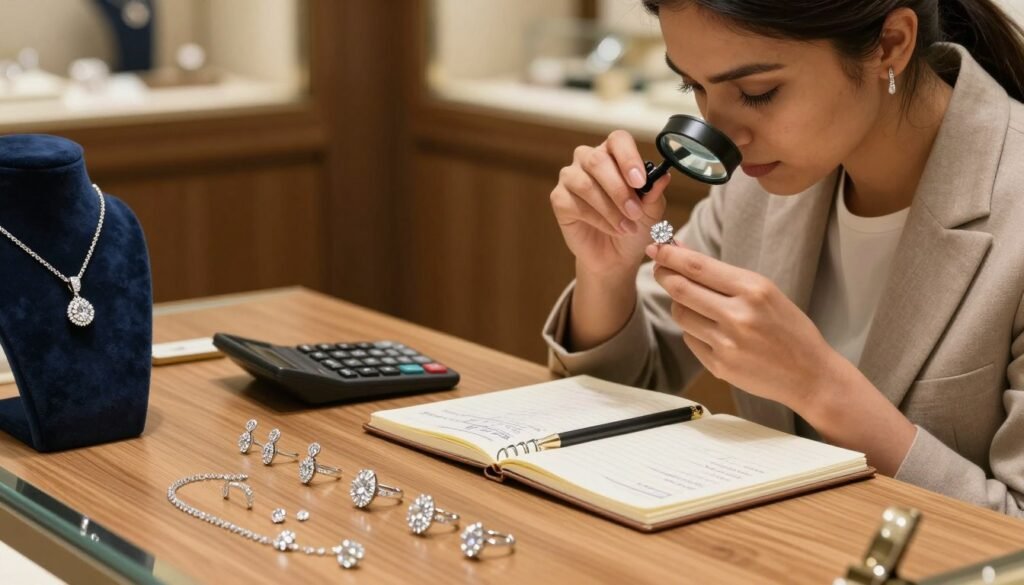
Set a complete spending limit for the purchase
Set the highest amount you will spend before visiting any store. This financial boundary helps stop emotional spending on beautiful designs.
Count the full cost, not only the stone.
Decide whether you are buying an engagement ring, wedding jewellery, or an everyday piece
Your jewellery’s purpose sets your priorities. An engagement ring may need a larger center stone and a higher budget.
Everyday pieces should focus on durability and comfort. Knowing how you will wear it helps you choose its setting and metal purity.
Separate diamond cost, metal cost, making charges, taxes, and customization fees
Clear prices matter when you review a quote. Ask your retailer to list the total price by these categories:
- Diamond Cost: The price of the stone based on its grade.
- Metal Cost: The current market rate for gold or platinum.
- Making Charges: The labor cost for crafting the design.
- Taxes: Applicable GST rates in India.
- Customization Fees: Any extra costs for bespoke work.
Choose which features matter most when you must make trade-offs
You may need to balance quality and size. For more visual impact, choose a slightly lower color grade and save money.
These factors to consider when choosing diamond jeweller guide your choice. Choose a professional who respects your priorities, not one pushing the most expensive inventory.
Step 1: Learn How Diamond Pricing Works in India
Learn diamond pricing in India before you buy. This helps you spot factors to consider when choosing diamond jeweller services with honest fees.
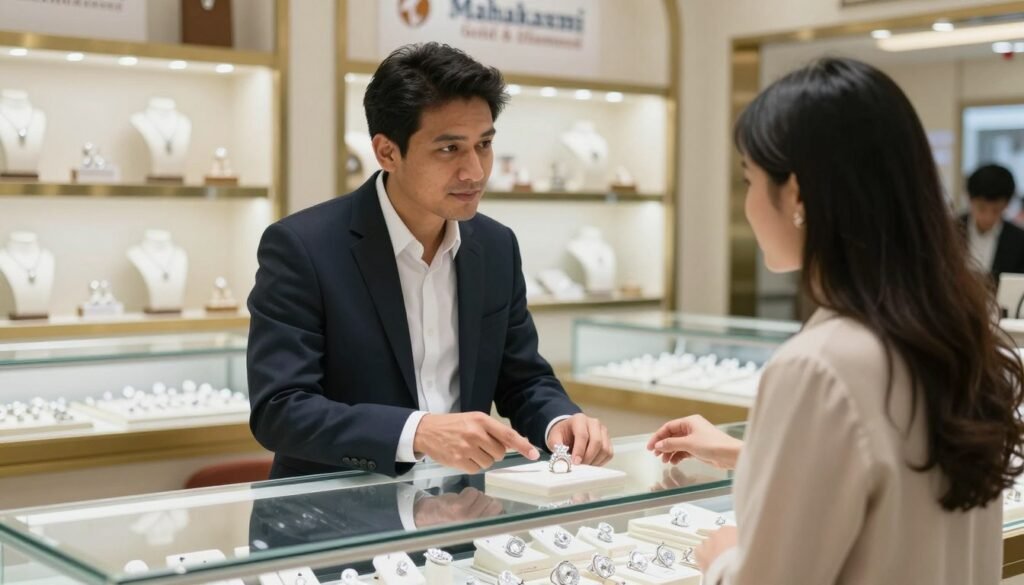
Understand how the four Cs influence a diamond’s price
The four Cs—Cut, Color, Clarity, and Carat—drive a diamond’s price in India. Higher grades cost more, but Prioritizing the cut boosts sparkle beyond unseen clarity grades.
Compare price differences between carat weight and visible size
Many buyers think higher carat weight always means a larger-looking stone. A slightly lighter, well-cut stone can look larger than a poorly cut, heavy stone.
Recognize how diamond shape affects value and face-up appearance
Your diamond’s shape affects its price and visual presence. Round brilliant diamonds usually cost most because demand is high and cutting loses rough stone.
Fancy shapes, such as pear or oval, offer larger appearance at same price, helping budgets.
Account for Indian GST, making charges, and retailer margins
In India, your price includes 3% GST, setting charges, and retailer profit. Learn how to choose diamond jeweller partners with clear costs.
| Cost Component | Description | Impact on Total Price |
|---|---|---|
| Diamond Value | Based on 4Cs and market rates | High |
| Making Charges | Labor cost for the setting | Moderate |
| GST (India) | Standard government tax | Fixed (3%) |
| Retailer Margin | Store overhead and profit | Variable |
Ask for a written cost breakdown before discussing discounts
Before discussing discounts, request a detailed written cost breakdown separating diamond, metal, and service costs. A refusal is among the factors to consider when choosing diamond jeweller, showing unclear prices.
Step 2: Compare Natural and Lab-Grown Diamonds
Choosing a reputable diamond jeweller starts with knowing what kind of stone you are buying. Natural and lab-grown diamonds share chemical and physical properties, but market value and future expectations differ.
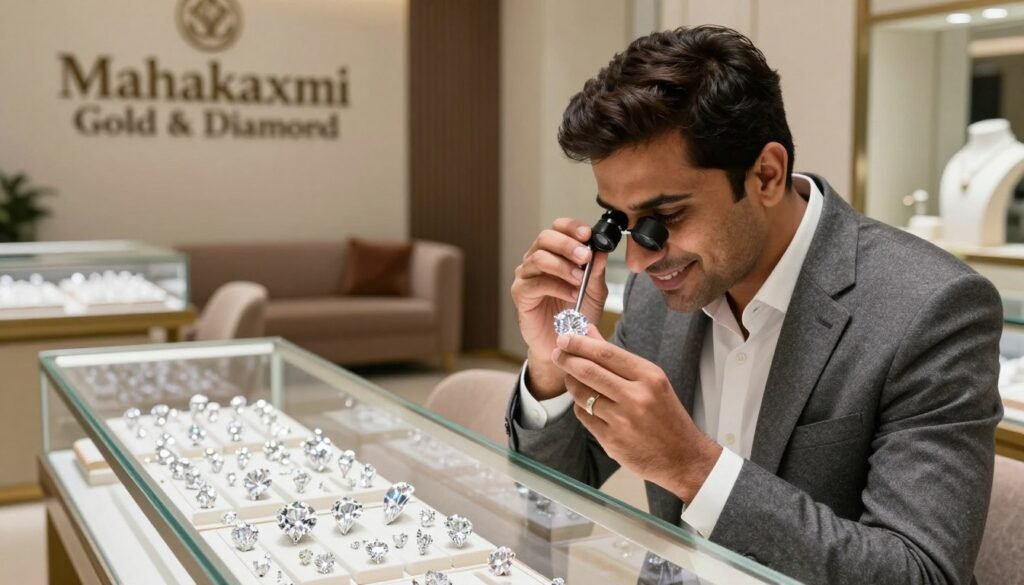
Compare origin, appearance, durability, and resale expectations
The visual appearance looks almost identical to the naked eye. Yet, each stone’s origin affects its rarity and possible future value.
| Feature | Natural Diamond | Lab-Grown Diamond |
|---|---|---|
| Origin | Mined from the earth | Created in a laboratory |
| Durability | Extremely high (10 Mohs) | Extremely high (10 Mohs) |
| Resale Value | Generally holds value better | Significantly lower resale potential |
Confirm that the seller clearly identifies the diamond type
Transparency shows that a business can be trusted. When selecting the right diamond jeweller, ask for clear documents about the stone’s origin.
Avoid retailers using vague terms like “premium” or “fine.” They should say whether each diamond is mined or lab-created.
“The true value of a diamond lies not just in its sparkle, but in the honesty of the transaction and the clarity of its origin.” — Industry Expert
Review certification requirements for natural and lab-grown stones
Always insist on a certificate from a recognized independent laboratory, such as GIA or IGI. The report must clearly state whether the diamond is natural or lab-grown.
Never accept a verbal promise instead of a formal, written grading report.
Choose the option that fits your priorities instead of paying for assumptions
Decide what matters most before visiting the store. If you prioritize long-term investment value, a natural diamond is often preferred.
A lab-grown diamond offers a larger stone and excellent appeal for less money.
Check whether the retailer’s exchange and upgrade policies differ by origin
Before finalizing your purchase, ask about the store’s buyback and upgrade policies. Many jewellers have different rules for natural and lab-grown stones.
By selecting the right diamond jeweller, you keep resizing and upgrade choices flexible and clear.
Step 3: Evaluate the Diamond’s Cut, Color, Clarity, and Carat
Diamond quality depends on four key traits, not just its price. This diamond jeweller buying guide shows how they shape beauty and market value.
Prioritize cut quality for brightness and visual appeal
The cut may be the most important trait because it controls how light moves. A well-cut diamond sends light back to your eyes, creating your signature sparkle.
Never accept poor cut quality, because the stone may look dull.
Choose a practical color grade for the selected metal
You need not buy a colorless diamond for yellow or rose gold. The warm metal hides slight yellow tints, so a lower color grade may look great.
Smart shoppers often save money by matching diamond color with the metal setting.
Find clarity that looks clean without paying for invisible perfection
Clarity shows internal inclusions or surface blemishes. Most people cannot see these tiny marks without a jeweler’s loupe.
Choose an eye-clean diamond that looks flawless to the naked eye. Do not pay more for a grade only a microscope can confirm.
“The true value of a diamond is found in the balance between its visual performance and your personal budget.”
Compare carat weight with millimeter measurements and face-up size
Carat weight measures mass, not always size. Two diamonds with the same carat weight can have different millimeter measurements based on their cuts.
Check the face-up dimensions to ensure the diamond looks as large as expected.
Inspect symmetry, polish, fluorescence, and proportions on the grading report
When using your diamond jeweller selection tips, check the grading report’s technical details. These details affect your diamond’s long-term strength and light performance:
- Symmetry: Ensures the facets are aligned for maximum light return.
- Polish: Refers to the smoothness of the diamond’s surface.
- Fluorescence: Can make a diamond appear milky or oily in direct sunlight.
- Proportions: Dictate the overall balance and fire of the stone.
Step 4: Verify the Diamond Certificate and Hallmark
Protect your investment by checking official diamond documents. When you find best diamond jeweller, choose clear, third-party reports.
These reports prove your stone’s quality and value.
Check whether the certificate comes from a recognized independent laboratory
Always choose a diamond with a report from GIA, IGI, or HRD. These groups work apart from retailers, so grading stays unbiased and accurate.
Avoid store certificates because they may overstate the stone’s quality.
Match the report number with the laser inscription and the physical stone
Most modern diamonds have a tiny laser inscription on the girdle. This inscription matches the report number.
Use a jeweler’s loupe to check the number against the report. This confirms you are buying the exact stone described.
Review the report date, grading details, treatments, and natural or lab-grown status
Check the certificate date because older reports may use outdated grading standards. Look for treatments like laser drilling or fracture filling.
These treatments can lower value. Also, check whether the stone is natural or lab-grown before paying.
Confirm the gold or platinum hallmark through the Bureau of Indian Standards
The diamond certificate covers the stone, but metal quality needs separate checking. Look for the BIS hallmark on your jewelry.
It confirms the purity of the gold or platinum used. This is key among the top diamond jeweller selection criteria.
Be cautious when a seller refuses to provide documentation before payment
If a retailer will not show the certificate or hallmark, walk away. Transparency is non-negotiable when buying precious stones.
A trustworthy seller will provide the paperwork. These documents prove the quality of the seller’s inventory.
Step 5: Choose the Right Diamond Jewellery Design
A stone’s sparkle matters, but jewellery design affects comfort and lasting wear. When selecting the right diamond jeweller, choose a partner who explains your setting’s practical needs.
Match the setting style to your daily routine and personal taste
Your lifestyle affects how well your jewellery holds up over time. Active people may prefer low-profile settings that avoid clothing snags during daily tasks.
Think about how often you plan to wear the piece. Delicate designs suit special occasions, but daily wear needs more robust construction for constant movement.
Compare solitaire, halo, three-stone, cluster, and pavé designs
Each design offers a different look and level of diamond protection. These differences matter in any diamond jeweller buying guide:
- Solitaire: A timeless choice that highlights a single stone, though it requires careful prong maintenance.
- Halo: Adds extra brilliance by surrounding the center stone with smaller diamonds, which can also provide a protective frame.
- Three-Stone: Symbolizes past, present, and future, offering a balanced look that works well with various diamond shapes.
- Cluster and Pavé: These styles use multiple smaller stones to create a larger visual impact, though they require more frequent cleaning to maintain their shine.
Assess prong security, band thickness, stone protection, and cleaning access
Diamond security depends on strong prongs. Make sure they hold the stone firmly and resist bending or fabric snags.
A thicker band usually offers more durability for daily wear. Also, check cleaning access; deep crevices can trap dirt and oils, dulling the diamond’s natural fire.
Select a metal color and purity that complement the diamond
Choose metal that brings out your diamond’s color. White gold or platinum can brighten near-colorless diamonds, while yellow gold can hide slight tints.
In India, 18K gold is popular for diamond jewellery. It balances durability and purity. Always confirm the hallmark and check the quality you paid for.
Check comfort, sizing, durability, and future repair requirements
Before choosing your design, try it on your finger or neck for comfort. It should not pinch or feel too heavy during long wear.
Ask your jeweller about future resizing and repairs. A quality design should allow professional care without weakening the setting or risking the diamonds.
Step 6: Research How to Choose Diamond Jeweller Options
Knowing how to choose diamond jeweller takes patience and research. The right partner helps protect an authentic, valuable purchase for years.
Shortlist retailers with verifiable stores, contact details, and business history
Start a list of local or online jewellers with physical addresses and landline numbers. Check history; Transparency is the hallmark of a trustworthy seller, and choose long-serving brands.
Compare independent jewellers, established chains, and online sellers
Independent jewellers offer personal service and unique designs; large chains offer standard prices and support. Use these diamond jeweller selection tips to match your needs.
| Retailer Type | Key Advantage | Best For |
|---|---|---|
| Independent | Customization | Unique, bespoke pieces |
| Established Chain | Consistency | Standardized quality |
| Online Seller | Price/Variety | Comparing many options |
Read detailed customer reviews instead of relying only on star ratings
Star ratings can mislead, so read written feedback about diamond quality, certification, and after-sales service. Many detailed, positive reviews can help you find best diamond jeweller.
“Trust is the most expensive part of any jewellery purchase; ensure your jeweller earns it through transparency and consistent quality.”
Look for transparent policies, trained staff, and independent certification
Professionals should explain return, exchange, and buyback policies simply; staff should answer grading questions calmly. Each stone needs independent certification from recognized laboratories.
Check whether online sellers offer secure delivery and in-person verification
Choosing a reputable diamond jeweller means insured, secure shipping online and protects your investment. Many reputable brands offer local partner-store viewing or flexible returns, protecting your peace of mind.
Step 7: Compare Quotes From Multiple Jewellers
Review the factors to consider when choosing diamond jeweller and seek clear quotes. Collect quotes from several trusted stores to make a wise money choice.
Request equivalent quotes using the same diamond specifications
Give each jeweller the same details for a fair comparison. List your carat weight, cut, color, clarity, metal, and design style.
Ask for the same certification, such as GIA or IGI reports. A certified stone and an uncertified stone are not an apples-to-apples comparison.
Compare the total price rather than the advertised discount percentage
Some retailers use big discounts to hide high starting prices. Focus on the final out-of-pocket cost, not the sticker discount.
A small discount on low price may beat a huge discount on an overpriced item. Check the bottom line to find the offer that saves you money.
Separate diamond price from setting, metal, making, GST, and service charges
Ask for every cost in a clear breakdown. A professional jeweller should list the diamond, gold or platinum, making charges, and GST.
This detail helps stop hidden fees from raising your bill. It also shows whether the making charges fit the design’s complexity.
Ask why two similar-looking diamonds have significantly different prices
If two stones look alike, do not assume the cheaper one is a bargain. Ask staff to explain fluorescence, cut precision, and internal inclusions.
A lower price may mean a poorer cut or less desirable color tint. Knowing these details is vital to your research.
Use competing quotes to negotiate fairly without sacrificing certification or service
Use these diamond jeweller selection tips to negotiate fairly. Show a competitor’s clear quote to seek a better price or free insurance or cleaning.
Do not choose only by price if certification or after-sales support suffers. True value means balancing a fair price with a secure, high-quality purchase.
Step 8: Inspect the Jewellery Before You Pay
Before paying, use a hands-on check and a reliable diamond jeweller buying guide. This helps you avoid mistakes and shows choosing a reputable diamond jeweller values honesty.
Examine the diamond under different lighting conditions
Stores often use special lights; ask for natural daylight or normal indoor lighting. This shows how the diamond looks daily, not only under showroom spotlights.
Check for visible inclusions, chips, loose stones, and uneven settings
Use a jeweler’s loupe; gently shake the piece to check stones are tight. Uneven settings can cause stone loss over time, so check prongs are even and secure.
Confirm the finished weight, diamond count, dimensions, and metal purity
Your invoice must clearly list your purchase details. Check these items before finalizing payment:
- Total finished weight of the jewellery piece.
- Exact diamond count and individual carat weights.
- Accurate dimensions of the setting.
- Metal purity, such as 18K or 22K gold, as indicated by the hallmark.
Compare the physical piece with the invoice and certificate
Match the laser inscription on the diamond’s girdle with your certificate’s report number. Check that dimensions and color grade match; fix any difference before buying.
Request an independent inspection for a high-value purchase
For a high-value investment, ask an independent gemologist for a second opinion. It adds verification, gives peace of mind, and confirms choosing a reputable diamond jeweller.
A professional appraisal checks quality and authenticity, supporting your diamond jeweller buying guide decision.
Step 9: Read the Invoice, Warranty, and Return Terms
Protecting your investment starts with a thorough examination of the invoice and warranty terms. In a reliable diamond jeweller buying guide, treat each document as a binding contract that safeguards your future interests.
Verify that the invoice lists diamond grades, certificate details, and metal purity
Your invoice must list the diamond’s 4Cs and specific certificate number. It must state the exact purity of gold or platinum used in the setting.
Never accept a vague receipt that lacks these critical identifiers.
Understand resizing, repair, cleaning, and maintenance coverage
Ask your retailer to explain after-sales support clearly. Ask if resizing is free or has a fee.
Also ask how long the warranty covers routine cleaning and prong tightening. Knowing these details prevents unexpected costs later.
Review return, exchange, buyback, and upgrade conditions before ordering
Life changes, so your jewellery needs may change too. Read the fine print about returns, exchanges, and future buyback values.
Check the depreciation policy if you plan to upgrade your stone in coming years.
Check deductions for making charges, taxes, stones, and depreciation
For buyback or exchange values, know what the jeweller deducts. Most retailers subtract GST, making charges, and sometimes smaller accent stones.
Transparency in these deductions shows a trustworthy business.
Get all promises about delivery, customization, and discounts in writing
Verbal promises are hard to enforce during a dispute. Record delivery timelines, customization requests, and agreed discounts on the invoice.
Clear paperwork meets the top diamond jeweller selection criteria and verifies retailer duties.
Step 10: Avoid Common Diamond Jewellery Buying Traps
These factors to consider when choosing a diamond jeweller help experienced buyers avoid traps.
The Indian jewellery market is vast, but most retailers are honest; some hide poor value. Staying alert helps protect your hard-earned money and ensure a genuine product.
Do not treat a large discount as proof of a good deal
Retailers often advertise massive discounts to lure customers into their stores. A high percentage off means little when sellers first inflate the base price.
Always focus on the final net price instead of the discount percentage offered.
Do not buy based only on carat weight or a high color grade
Many shoppers make the mistake of placing carat weight first. A large diamond with poor cut may look dull and lifeless.
A smaller, well-cut stone can look brighter than a large, poorly cut one. A top-tier color grade may waste money if poor clarity or brilliance hides its beauty.
Watch for vague terms such as “premium,” “certified,” or “conflict-free”
Marketing buzzwords like “premium” or “exclusive” carry no official weight in the diamond industry. Ask to see the specific report from a reputable laboratory when sellers claim certification.
Without written documentation, these terms are simply sales tactics that create false comfort.
Reject pressure tactics, incomplete paperwork, and unusually low prices
Walk away if a salesperson says a deal will vanish soon. Unusually low prices for high-quality diamonds often signal synthetic stones or poor-quality goods.
Learning how to choose a diamond jeweller means trusting your instincts and leaving.
Protect your payment, personal information, and delivery details
Your security matters as much as the diamond’s quality. Never share sensitive financial details over unsecured networks or with unverified online sellers.
Always ensure your delivery is insured and receive a formal, detailed invoice for every transaction.
| Red Flag | Why It Is Risky | Safe Practice |
|---|---|---|
| Massive Discounts | Inflated base prices | Compare final net costs |
| Vague Claims | Lack of accountability | Demand official reports |
| Pressure Tactics | Hides poor quality | Take time to decide |
| Unusually Low Price | Potential fraud | Verify market rates |
Step 11: Use a Practical Diamond Jeweller Selection Checklist
The diamond market in India feels easier with a clear plan. To find best diamond jeweller, check facts, quality, and authenticity, not flashy ads.
Confirm the jeweller’s identity, reputation, and physical or digital presence
First, verify the retailer’s business history. A reputable jeweller needs a clear store address or digital platform with verified contacts.
Consistency across their online and offline presence strongly shows a legitimate business.
Verify certification, BIS hallmarking, and stone-to-report matching
Always request independent laboratory certification for your diamond. Check the gold or platinum setting for a BIS hallmark, which proves metal purity.
Check your documents’ report number against the laser inscription on the diamond girdle.
Compare total quotes and document every charge
When using the top diamond jeweller selection criteria, focus on the final price. Request a detailed breakdown of diamond cost, metal weight, making charges, and taxes.
Never accept a vague “all-inclusive” price without knowing each charge.
Assess design quality, after-sales support, and policy flexibility
Good design means more than beauty; it also gives the setting strength and comfort. Ask about their after-sales services, including free cleaning, prong tightening, and resizing.
A flexible return and buyback policy shows that the jeweller stands behind its products.
Score shortlisted jewellers by transparency, value, service, and trust
Create a simple scoring table to compare retailers, rather than choosing one discount. Use these diamond jeweller selection tips to score stores from one to five in four areas:
- Transparency: How clearly did they explain the pricing and certification?
- Value: Does the quality of the diamond justify the total cost?
- Service: Was the staff knowledgeable and patient with your questions?
- Trust: Do they have a solid reputation and clear, written policies?
Step 12: Make the Final Purchase Decision With Confidence
You have gathered the needed information. Now finalize your purchase with total peace of mind.
By selecting the right diamond jeweller, you have reduced many risks. Make the final choice with a clear head and your original goals.
Compare the best options against your original budget and priorities
Review your top choices once more. Make sure they fit your budget and priorities.
Shiny displays can distract you, but discipline helps prevent buyer’s remorse. Always prioritize the piece that best serves its intended purpose.
Choose a daily wear ring or special heirloom based on its purpose.
Choose value that you can see and verify rather than specifications you cannot detect
Focus on visual brilliance and setting quality, not tiny grading differences. A stunning diamond with a reliable certificate offers better value.
It offers more value than higher specs you cannot see. Trust your own view and the retailer’s verified data.
Complete final checks before authorizing customization or payment
Before paying, inspect the jewelry one final time. Check these details:
- Confirm the design matches your requested customization.
- Check the metal hallmark for purity (e.g., 18K or 22K gold).
- Review the final invoice to ensure all discounts and taxes are applied correctly.
- Confirm the delivery timeline and shipping insurance terms.
Store the certificate, invoice, appraisal, and policy documents safely
After buying, treat your paperwork like the jewelry. Keep the original diamond certificate, tax invoice, and warranty cards safely.
Use a fireproof safe or secure digital folder. These documents are essential for future resale, insurance claims, or routine maintenance.
Arrange professional insurance or valuation when the purchase justifies it
Do not rely only on the store’s appraisal for high-value items. Use factors to consider when choosing diamond jeweller services for an independent valuation.
Check their reputation and access to specialized equipment. An independent appraisal gives an objective market value assessment.
This helps secure full insurance against theft or damage.
Conclusion
Buying a high-quality diamond piece takes more than spotting a shiny stone. Look beyond flashy discounts and brand names to find true value. Learning how to choose diamond jeweller options requires careful checks and documents.
Match your budget with clear prices and certified quality. Compare total costs, including taxes and making charges, to avoid hidden fees. Selecting the right diamond jeweller means building trust through clear words and verifiable facts.
Choose retailers with independent certificates and clear return policies. Check your jewellery under different lights before making your final payment. Keep your invoice, appraisal, and certificate in a safe place for long-term value.
Compare quotes from reputable sources: Tanishq, Kalyan Jewellers, or trusted local boutiques. Your care helps your choice bring lasting joy and financial peace of mind. Trust yourself, check every detail, and enjoy your beautiful new jewellery.